Thursday, April 6, 2017

What to do in the Garden in April


Planning
·      Prepare garden soil for spring planting. Add generous amounts of organic materials and other amendments, ideally using the results of a soil analysis as a guide.  Compost can be especially helpful if it is free from weed seed and left on the surface.For more about soil testing, click here.  Also, the Master Gardener help desk can test your pH.
·      Prepare raised beds in areas where cold soils and poor drainage are a continuing problem. Add organic matter if possible.  A wooden or other structure is not necessary, but it prevents soil from slumping out of bed over time.
 For more about raised beds, click here.
 Maintenance and Clean Up
·      Allow foliage of spring-flowering bulbs to brown and die down before removing.


·      Apply compost or fertilizer to cane, bush, and trailing berries.  Mulch to prevent weeds and moisture loss.

  
·      Place compost or decomposed manure around perennial vegetables, such as asparagus and rhubarb.
 Mulch to prevent weeds and moisture loss.

  
·      Optimum time to fertilize lawns, as long as heavy rains aren’t expected. Apply no more than 1 pound nitrogen per 1,000 square feet of lawn. It's safest and kindest to our environment to use organic fertilizer.  Reduce risks of run-off into local waterways by not fertilizing just prior to rain, not over-irrigating, and keeping fertilizer away from drainage or very wet areas.
·      Optimum time of year to dethatch and renovate lawns.  Moss is not a problem for most.  It is green most of the year and never requires mowing or attention.   If you really don't care for it anyway, consider shade tolerant plantings instead or if there is adequate sunlight, add lime and rake soil surface prior to seeding with perennial ryegrass.
·      Prune and shape or thin spring-blooming shrubs and trees after blossoms fade.


 Planting/Propagation 
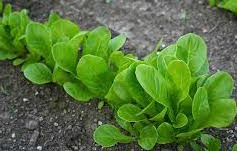
·      It's a great time to start a vegetable garden. Among the vegetables you can plant now - broccoli, brussels sprouts, cabbage, carrots, cauliflower, chard, chives, endive, leeks, lettuce, peas, radishes, rhubarb, rutabaga, spinach, and turnips. 
    · See this very helpful publication on growing vegetables. Growing Your Own Guide
Pest Monitoring and Management
·      Use traps or pet safe baits for slug control near susceptible plants.  Read and follow all label directions prior to using any chemical control.

  Did you know that invasive slugs brought from Europe are the ones that damage our plants?  Did you know that some slugs and snails are good for your garden because they are predators of the damaging ones??   For more about slugs, click here.
·      Monitor strawberries and other plants for spittlebugs and aphids; if present, wash off with water.  
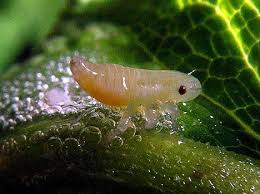
Spittlebug

Aphids can be green, yellow, gray, brown, reddish, 


·    

·      Cut or pull weeds near the garden to remove potential sources of plant disease.  These are good to compost if they haven't gone to seed.  Turn pile if they begin to grow.


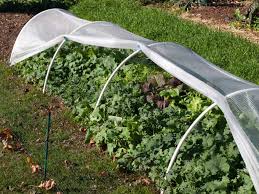
·      Use floating row covers to keep insects such as beet leaf miners, cabbage maggot adult flies, and carrot rust flies away from susceptible crops.

  For more on row covers, see this link.
·      Help prevent damping off of seedlings by providing adequate air flow.


Saturday, March 4, 2017

Community Garden Information

NEIGHBORHOOD GARDENING GROUPS
Corvallis Garden Share
City-wide Facebook group for sharing produce, knowledge, seeds, and starts.
Search for “Corvallis Garden Share” on Facebook
Seavy Community Network
In northeast Corvallis, in the vicinity of Seavy Ave. Potlucks, sharing and support (skills, tools, seeds, knowledge, and bartering).
Dana Allen • rebelfarms@peak.org • 541-757-8658
Tunison Neighborhood
In southwest Corvallis, west of Hwy. 99. Seed, garden and food preservation tool and skill-sharing.
Rebecka Weinsteiger • 541-231-1907
West Corvallis
In and around the College Hill section of Corvallis. tool and information sharing.
Annette Mills • 541-230-1237
Potlucks, canning parties,

COMMUNITY GARDENS WITH INDIVIDUAL PLOTS
Calvin Presbyterian Church Community Garden
1736 NW Dixon St.
www.facebook.com/communitygardenatcalvin • 541-757-8021
Dunawi Creek Community Garden
In Starker Arts Park, SW 45th Pl. at Country Club Dr. City-owned. Managed by Corvallis Environmental Center. Small fee and deposit. www.corvallisenvironmentalcenter.org • 541-753-9211
Sunrise Corner Community Garden
1165 SE Alexander Ave. A small, privately-owned community garden. “Fee” is labor rather than money.
Christine Robins • 541-738-2610
Leonard Street Community Garden
Plots available for low-income residents in the Tunison Neighborhood.
Rebecka Weinsteiger • 541-752-7220 ext. 312
Linn-Benton Community College Community Garden
6500 Paci c Blvd. SW., Albany. Open to the public. $50 fee includes the plots being tilled each year.
541-917-4603
Westside Community Garden
4000 SW Western Blvd. Under the direction of an experienced gardener. For low-income, primarily Latino, families to grow their own food. Small fee.
Sue Domingues • 541-231-3859 • sue_domingues@hotmail.com
Willamette Community Garden
SE Goodnight Ave. and SE Heron View St., at entrance to Willamette Park. Opening spring 2016.
Corvallis Parks and Recreation • 541-766-6918
COMMUNITY GARDENS WORKED COOPERATIVELY The Giving Garden
Located at Shepherd of the Valley Lutheran Church, 2650 NW Highland Dr. Produce donated to local food bank.
Jennifer.klammer@comcast.net
Lincoln School Garden
Located at Lincoln Elementary School, 110 SE Alexander Ave. Volunteers do a diversity of tasks (e.g. adult workdays, student activities, solo gardening tasks).
lpi.oregonstate.edu/healthyyouth/gardens/lincoln/index.shtml
Monroe Sharing Gardens
648 Orchard St., Monroe, OR. The food is shared among those who have con- tributed in some way, as well as others who are in need in the community. All surplus is donated to local food charities.
thesharinggardens.blogspot.com
Llyn Peabody and Chris Burns • ShareInJoy@gmail.com
Mid-Willamette Family YMCA Community Youth Garden
3201 Paci c Blvd. SW, Albany. Community garden of about 5,000 square feet. Produce is distributed to needy participants as well as local food banks. Mentoring@ymcaalbany.org • Kathleen Magnuson • 541-926-4488, ext. 106
OSU Organic Growers Club Garden
Just east of Corvallis, near Trysting Tree Golf Course on Hwy. 34. This two-acre, ten-year-old organic farm is run by student volunteers. Regular work parties are open to OSU students and the wider community. cropandsoil.oregonstate.edu/organic_grower
James Cassidy • james.cassidy@oregonstate.edu • 541-737-6810
Oak Creek Center for Urban Horticulture (OSU)
35th St. north of Western Blvd. Students from OSU’s Introduction to Organic Gardening course grow a seasonal garden, with produce donated to Plant a Row for the Hungry. Community volunteers are welcomed and may partici- pate in weekly training sessions and potlucks on Mondays. groups.hort.oregonstate.edu/content/osu-student-organic-garden
Al Shay • Al.Shay@oregonstate.edu • 541-737-2503
Philomath Community Garden
South of the Philomath Community Services building near Applegate and 9th St. Open to anyone in Philomath, but targeted for residents in
need. Shared garden area along with an orchard and berries. Surplus food will go to the local food bank.

Denise Guinn • 541-207-2982
Produce for the People Garden
4000 SW Western Blvd. This volunteer-based garden grows fresh nutritious

food for low-income individuals and agencies, while providing opportunities for gardeners of all ages to grow, learn, and contribute to their community. Most produce is donated.
Sue Domingues • sue_domingues@hotmail.com • 541-231-3859
SAGE Garden
Starker Arts Park, SW 45th Pl. at Country Club Dr. City-owned. Managed by Corvallis Environmental Center. Everything harvested goes to food banks. SAGE thrives thanks to service groups and dedicated volunteers. SAGE@corvallisenvironmentalcenter.org • 541-753-9211
Spartan Garden
Located at Corvallis High School, at the intersection of 14th St. and Fillmore Ave. Volunteers do a diversity of tasks. lpi.oregonstate.edu/healthyyouth/gardens/spartan/index.shtml 

This information Provided through the Corvallis Sustainability Coalition and its Garden Resource Guide

3 New NPKs have gone up in South Corvallis

Welcome to the Neighborhood Planters Kiosk -
Andrew, Lisa, and Rebecka

We're so glad you've joined in the fun!

Andrew has one of the most friendly, sustainable, community building front yards.  We're proud to be a little part of it!  He has some fantastic landscape ideas, so check it out at Alexander and Stone.


Don't miss his son's 'Kissing Lizard', much beloved neighborhood landmark

We're excited to have another pairing with a little library at Lisa's!

And we're delighted to be at the Leonard Street Community Garden!

Thanks so much to everyone who's come together to get us started and keep us rolling on!
Ruby Moon - Founder
Larry Passmore, Karl Hartzell, Nancy Tovar, and Christina Clark - builders

Evening Garden Club, Sherwin Williams, Mick’s Glass, Dept. of Fish and Wildlife, Home Depot, Spaeth, Office Depot, Benton County Master Gardeners - Sponsers


Thursday, March 2, 2017

~What to do in the Garden in March~
Planning
    Plan your vegetable garden for spring, summer, and fall vegetables that can be eaten fresh or preserved.  Container gardening might be a great option if sunny ground space is limited.
    A soil thermometer can help you know when to plant vegetables. Some cool season crops (onions, kale, lettuce, and spinach) can be planted when the soil is consistently at or above 40F. You can also use this chart to estimate dates.  We are in 'Region 2'.   Planting Date Chart

Maintenance and Clean Up
       Compost grass clippings and yard waste.  Avoid pesticides (including weed and feed, weed killers, or insect killers).

  If pesticides have been used, do not compost contaminated plant material.
       Spread finished compost over garden and landscape areas.

  You can screen the compost for a finer appearance if desired.  See this link for tips
       Prune spring-flowering shrubs after blossoms fade.


       Fertilize caneberries using a complete organic fertilizer or composted manure.
       Prune fall-bearing raspberries (in late-February or early-March).


Echinacea purpurea (Purple Cone Flower)
Planting/Propagation
    Divide hosta, daylilies, mums, and other summer or fall blooming perennials that need dividing.

 See this link for tips.
    Plant insectary plants (e.g. Alyssum, Phacelia, coriander, candytuft, sunflower, yarrow, and dill) to attract beneficial insects to the garden. See Encouraging Beneficial Insects in Your Garden (PNW550).


    If soil is dry enough, prepare vegetable garden and plant early cool-season crops (carrots, beets, broccoli, leeks, parsley, chives, rhubarb, peas, onion, and radishes). 
    Plant berry crops (strawberries, raspberries, blueberries, blackberries, currants, gooseberries, and other berry-producing crop plants). See OSU Extension publications for berry varieties.

Pest Monitoring and Management

    Protect new plant growth from slugs. Least toxic management options include barriers and traps. Baits are also available for slug control; use with caution around pets. Read and follow all label 
    Learn to identify the predatory insects that can help keep aphids and other pests under control.

  See this article from Washington State University Extension.
    Prune densely growing mature ornamental shrubs and trees for air circulation, which helps reduce fungal disease.  See this article from Purdue University about pruning shrubs and trees. 

    Monitor landscape plants for damage or disease. Don't treat unless a problem is identified. Ask Master Gardeners if you're not sure about whether something is a problem or what to do about it. You can even email us a photo.
(541) 766-6750      4077 SW Research Way, Corvallis, 97333   bentonmg@oregonstate.edu